Ticketing platform
- Events & ticketing
- Cloud architecture
Study · Cloud architecture. An anonymised reference architecture by the Khaeli team, not a client system.
Overview
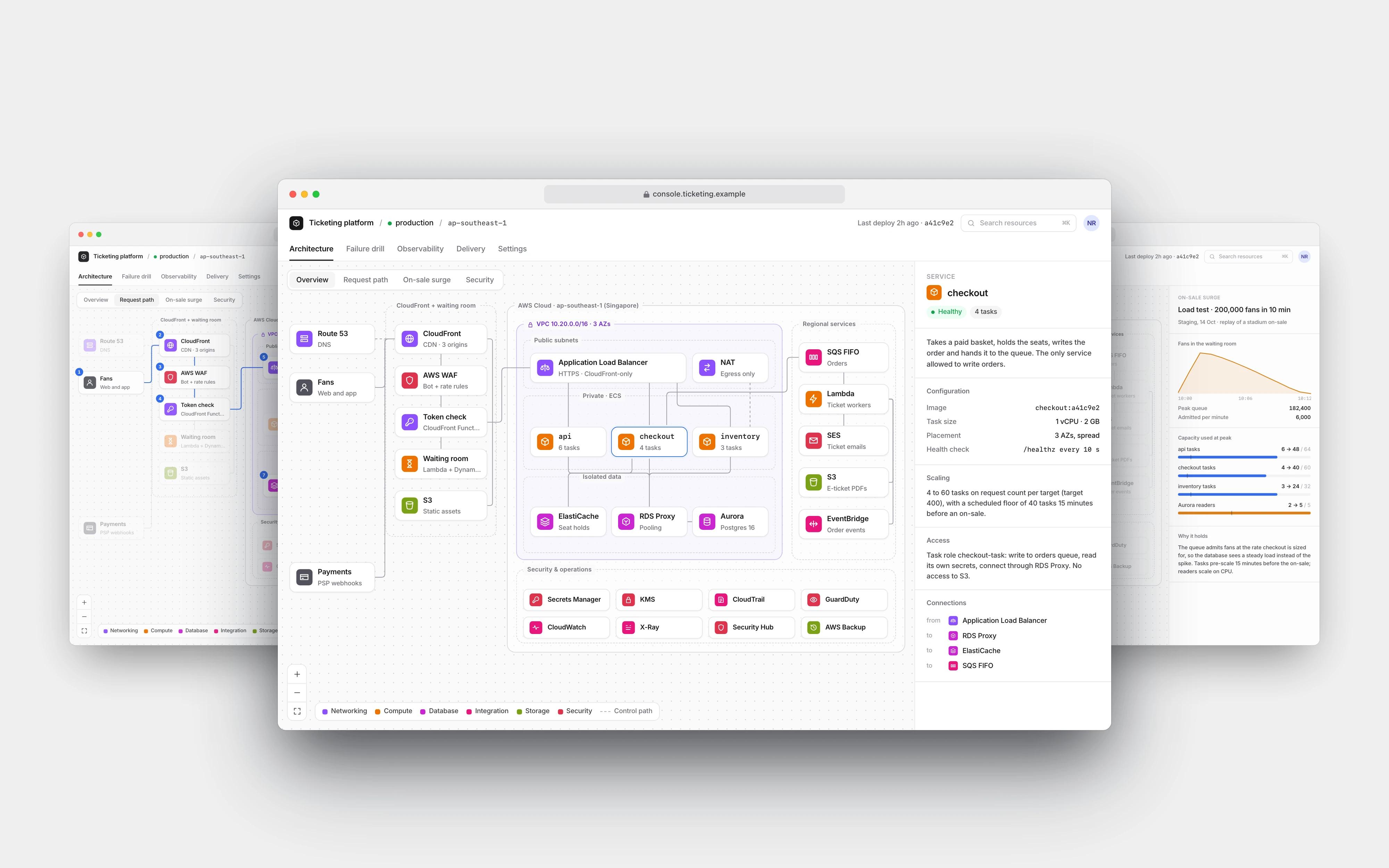
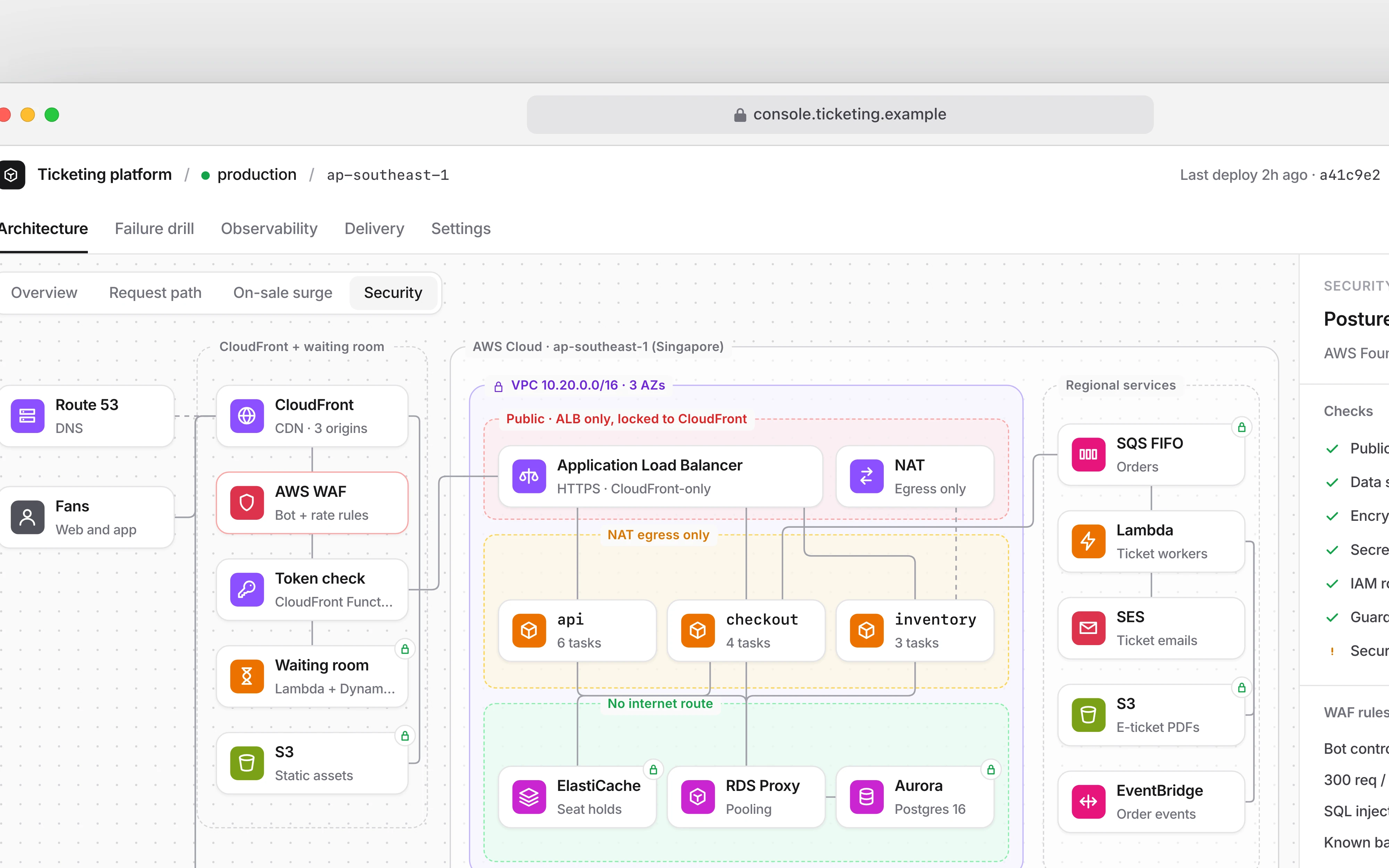
An AWS architecture for a regional ticketing platform, drawn as the console a platform team would hand over. Every service is on the diagram, and you can click any of them to see what it does, how it scales and what it is allowed to touch.
It is anonymised on purpose: the shape matters, not the brand. The same pattern fits any business whose traffic arrives all at once, such as flash sales, enrolment days and product drops.
The brief
A ticketing site is quiet for weeks, then takes fifty times its normal traffic in the first minutes of an on-sale. The usual failure is the database: thousands of checkouts land at once, connections run out, and the site goes down at the moment it matters most.
We set four constraints. Two fans must never buy the same seat. Losing an availability zone must not stop sales. Nothing but the CDN may be reachable from the internet. And the team must be able to see, in one place, how a request travels and what each service is allowed to do.
Design decisions
- 01
A waiting room in front, instead of scaling everything
When demand passes what checkout can take, fans wait in a queue (Lambda and DynamoDB) and receive signed tokens at the rate checkout is sized for. A CloudFront Function checks each token at the edge with no network call, so the check adds nothing at peak. Scaling the database to the peak would cost far more and still fail at the next, bigger on-sale.
- 02
Seats held in Redis with an expiry
A seat hold is a single atomic write with an 8-minute expiry. Abandoned baskets release themselves, and the order database only sees paid orders.
- 03
Orders leave the request path through a FIFO queue
Once the order is written, ticket PDFs, wallet passes and emails happen behind an SQS FIFO queue. A slow email provider can't slow checkout, and orders for one event stay in sequence.
- 04
Three zones, and a drill to prove it
Every tier runs across three availability zones. The failure drill cuts one off on purpose and records the recovery against a 5-minute target, so resilience is tested instead of assumed.
- 05
One public door
Only CloudFront is public. The load balancer accepts traffic from CloudFront alone, data sits in subnets with no internet route, and every store is encrypted with its own KMS key.
- 06
The trade-off: managed services over portability
Fargate, Aurora and ElastiCache cost more per unit than self-managed servers, and they tie the platform to AWS. For a small team that has to survive on-sales, fewer servers to patch is worth more than the saving.
Screens
7 screens, each designed at native size and rendered from the code.
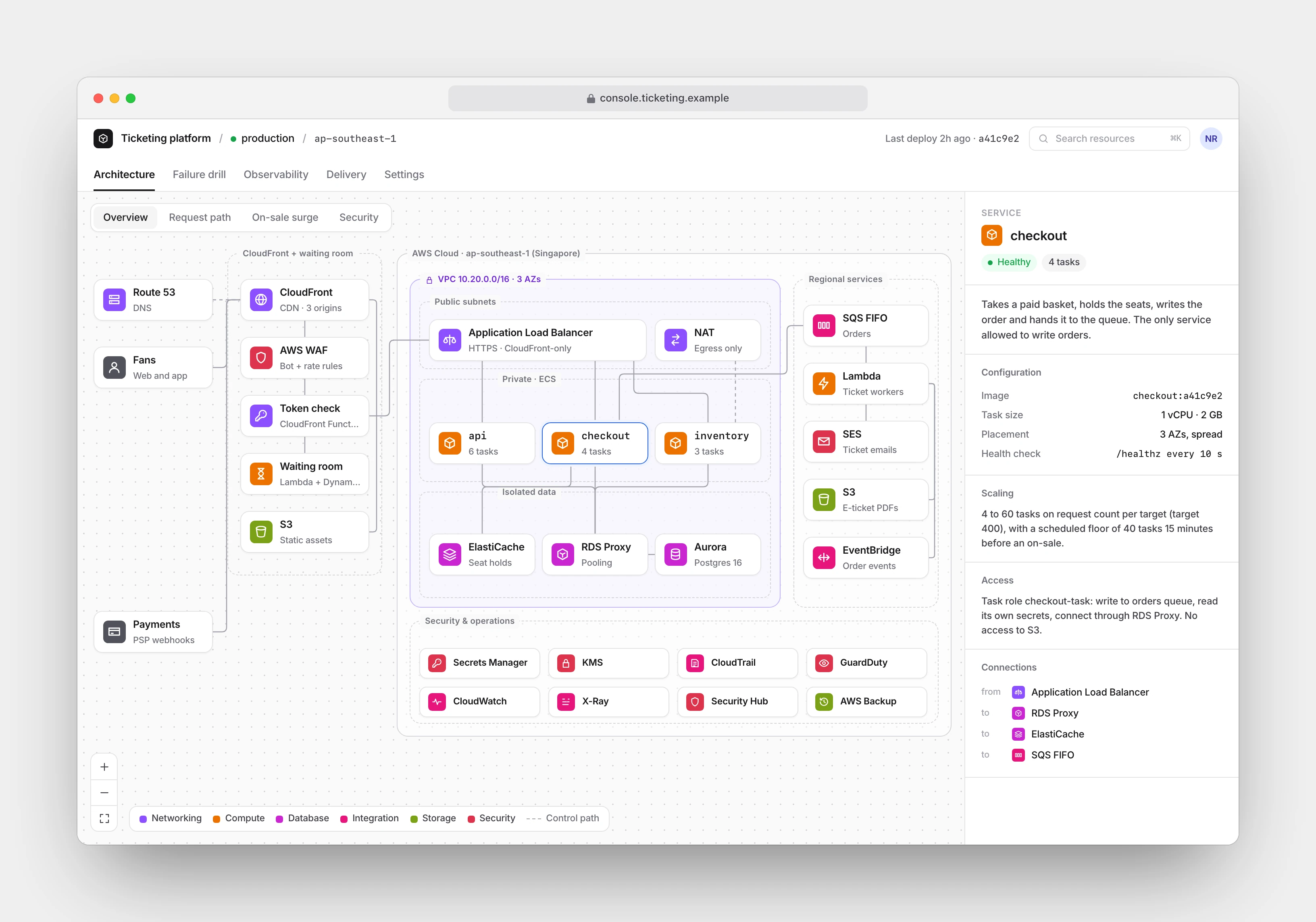
Architecture: the full platform across edge, VPC and regional services, with the checkout service open in the inspector. 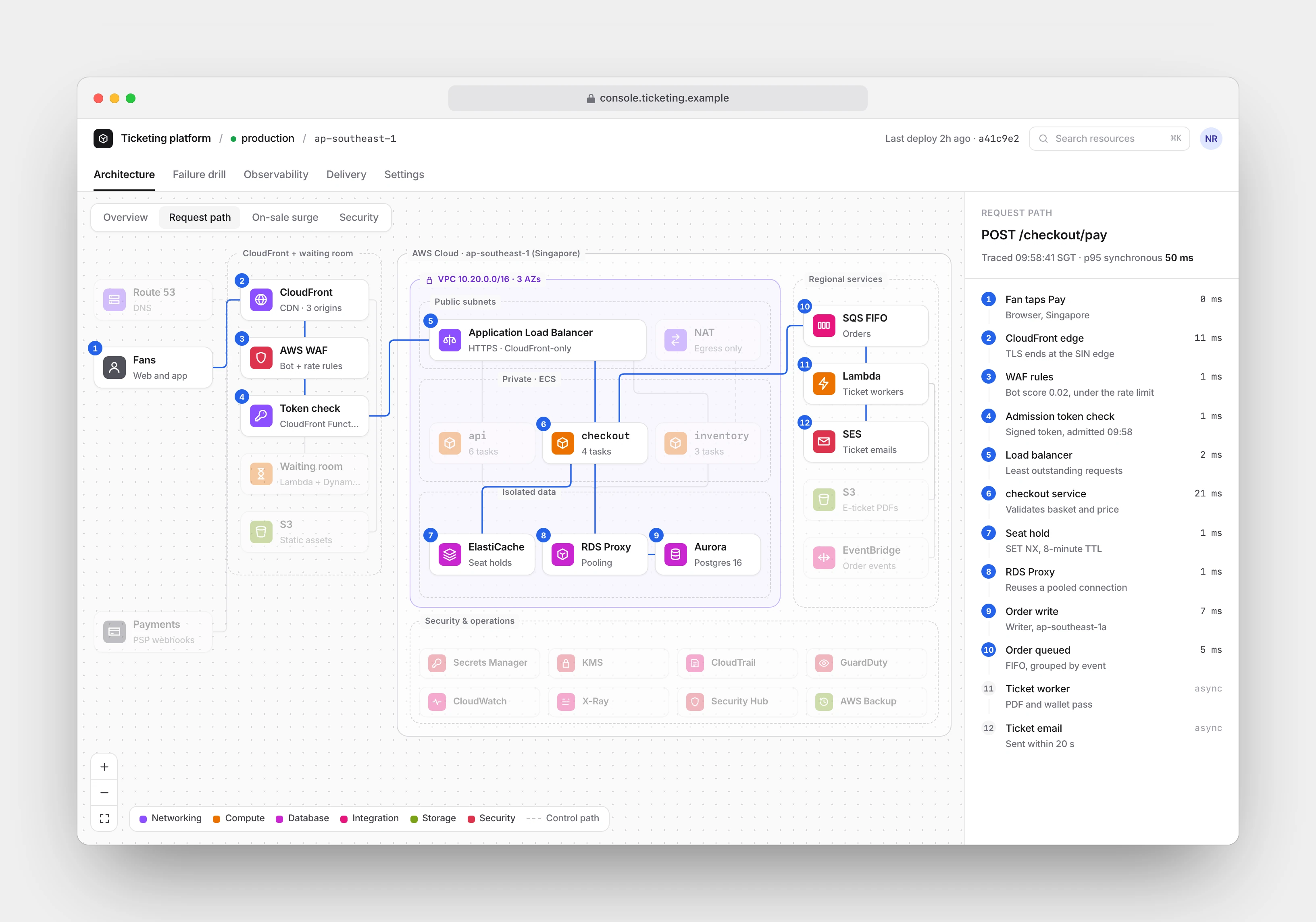
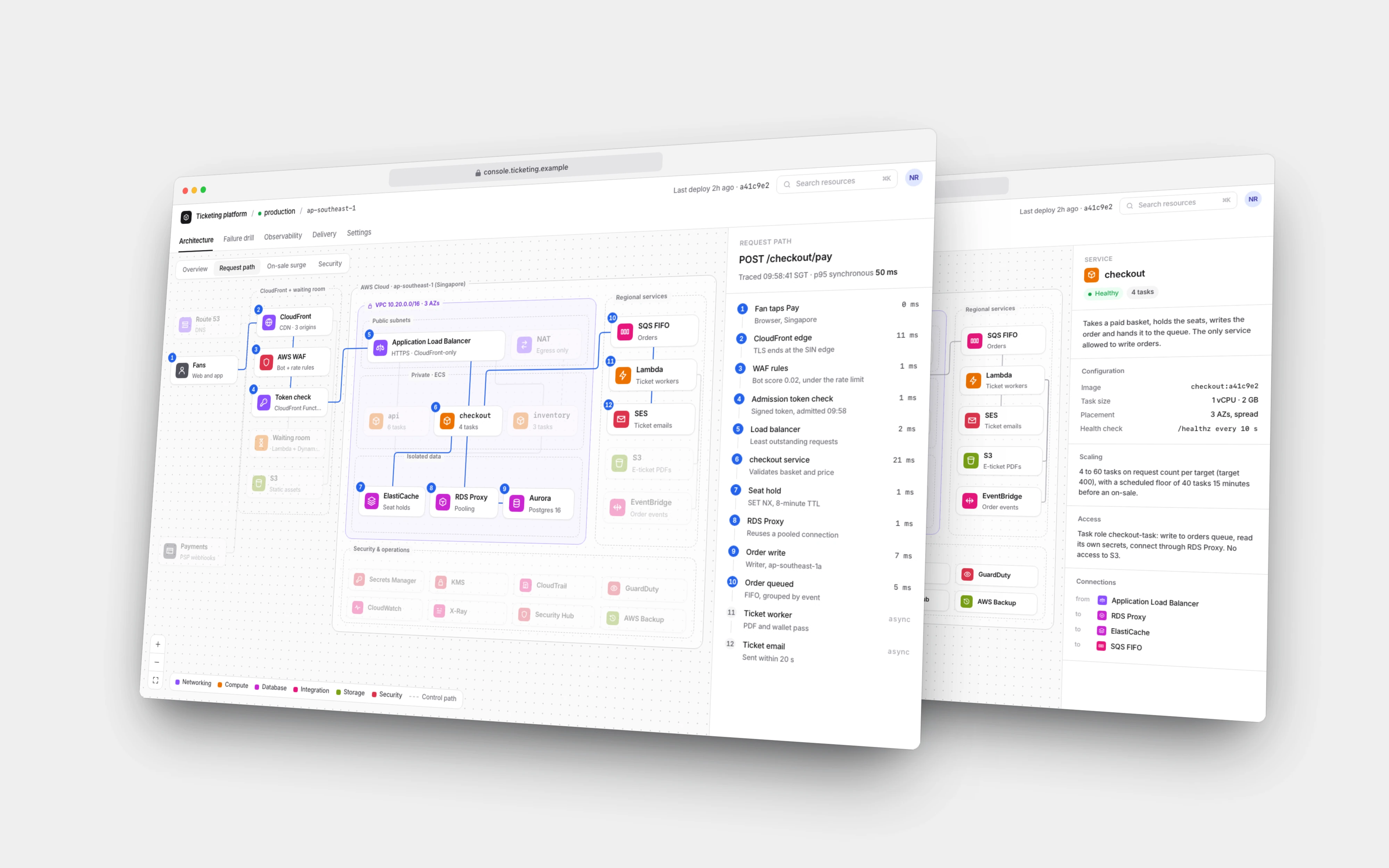
Request path: one checkout traced hop by hop, 50 ms before the order is queued. 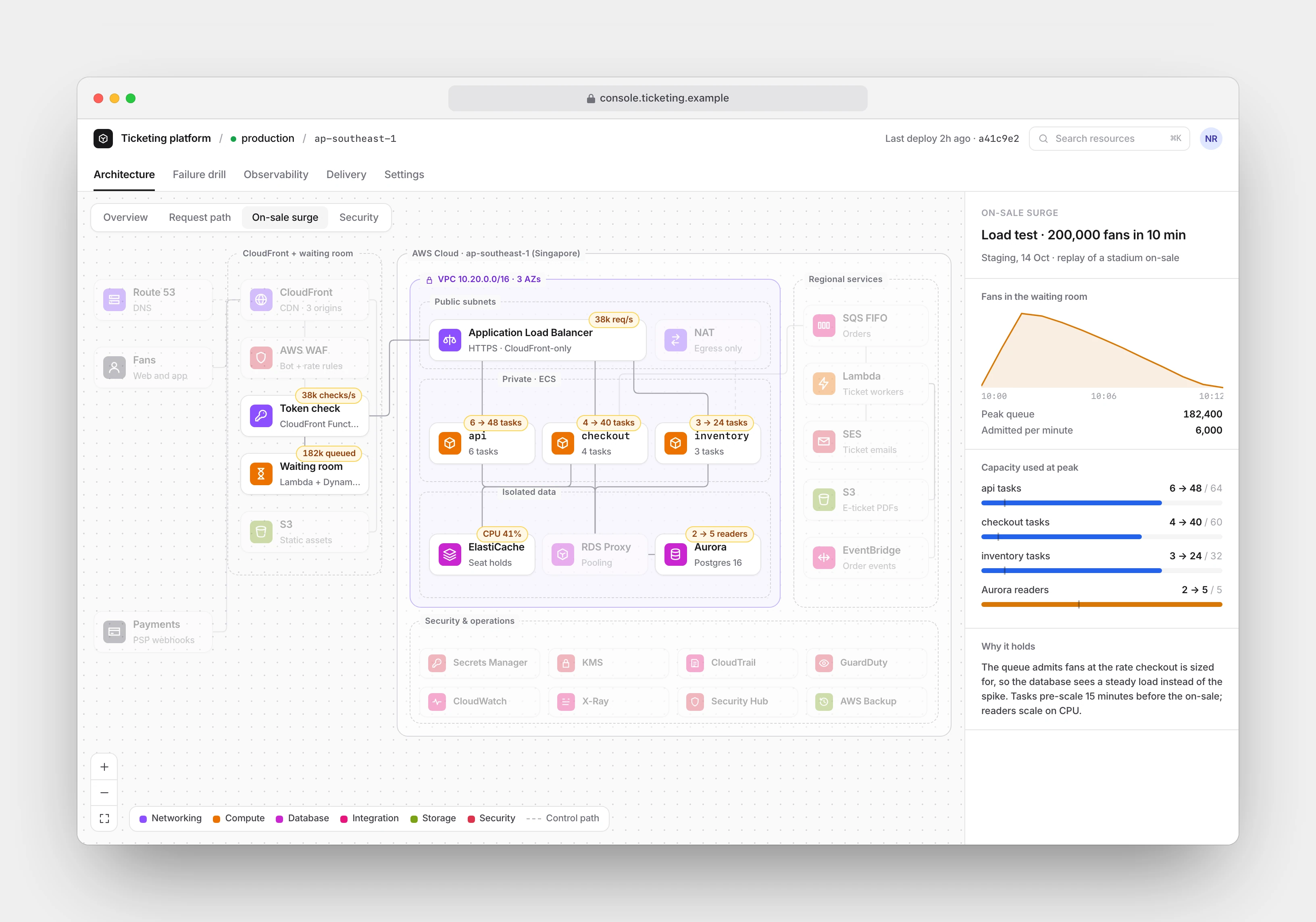
On-sale surge: a load test of 200,000 fans, the queue draining and each tier's capacity at peak. 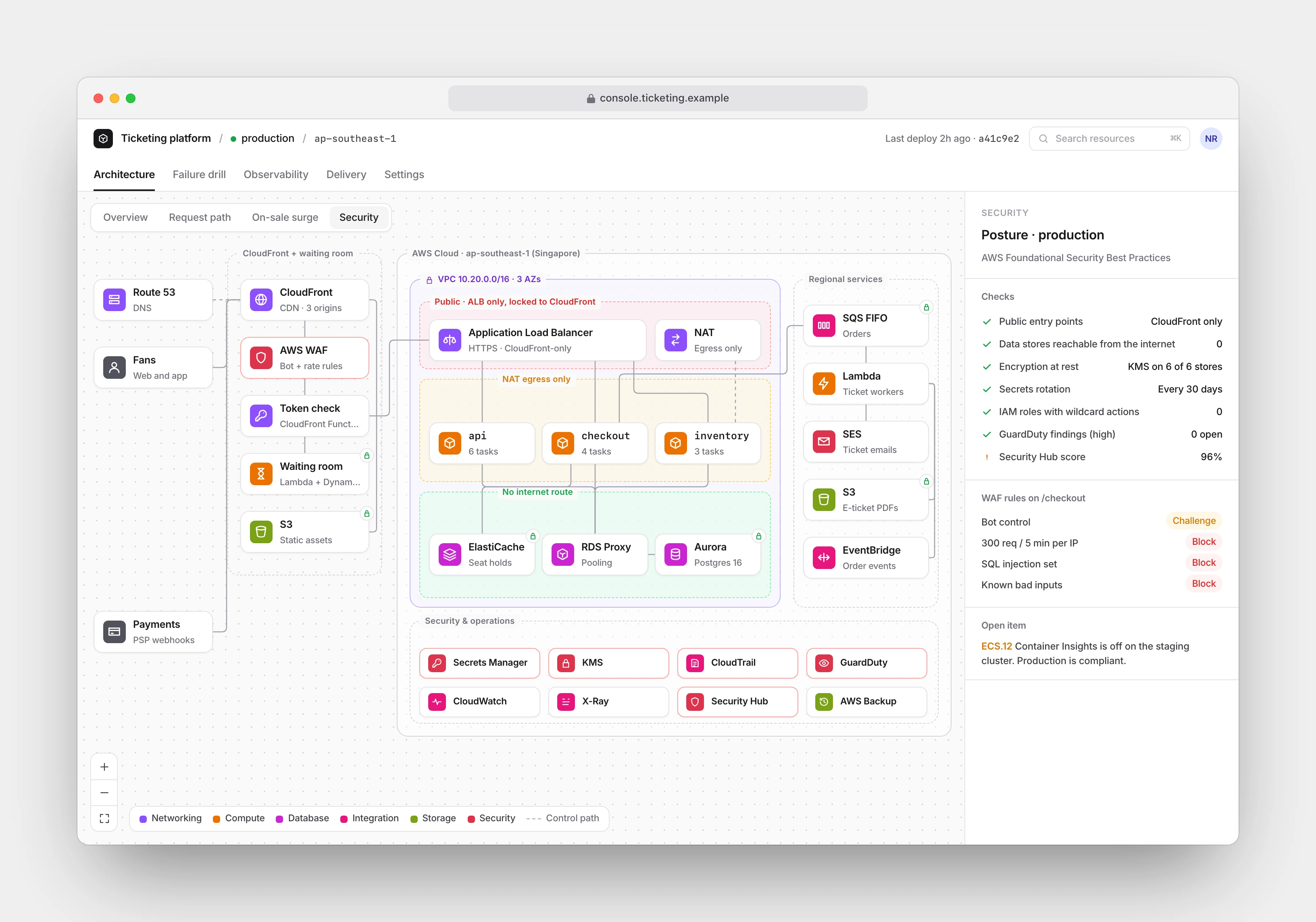
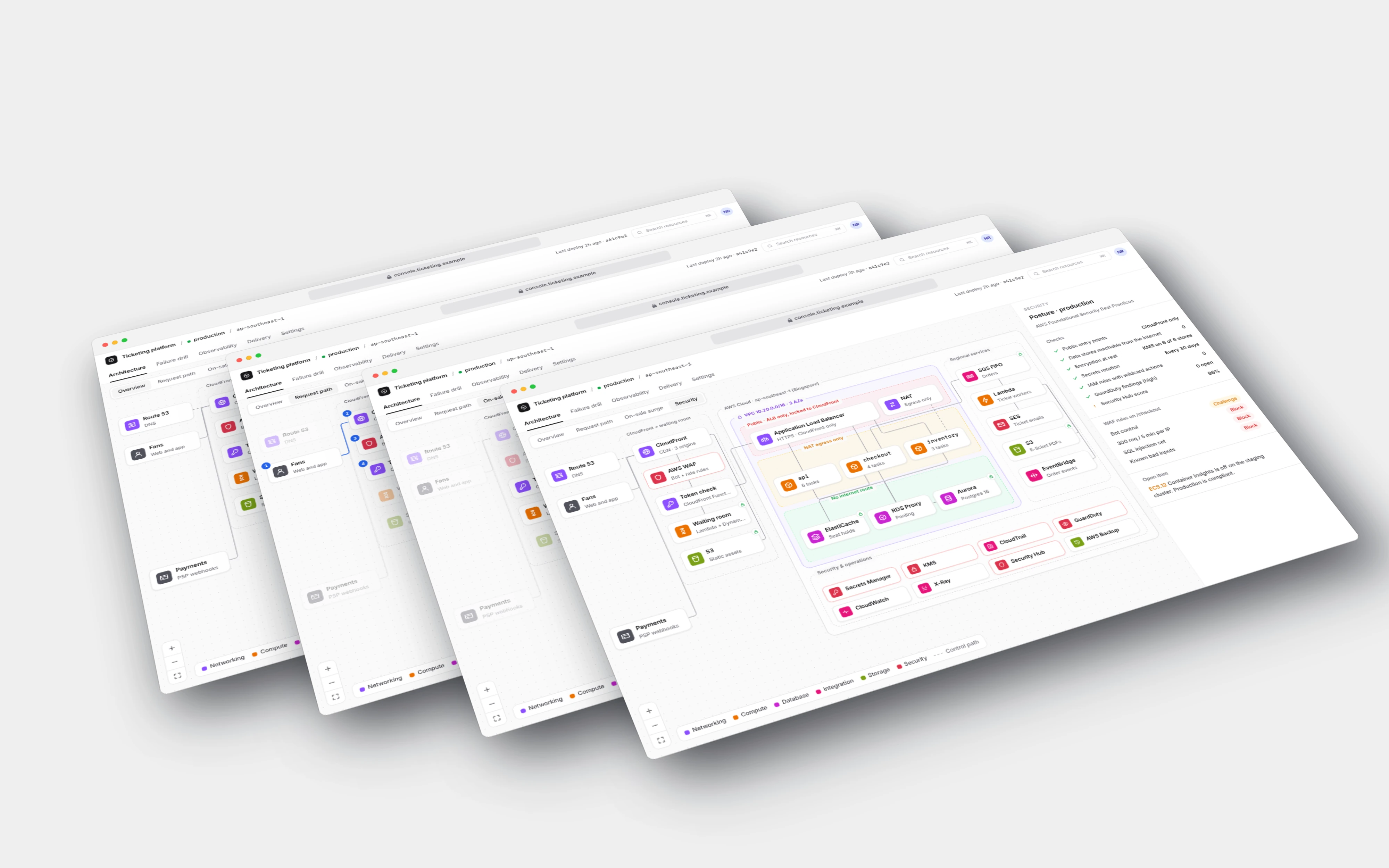
Security: subnets by exposure, encrypted stores, WAF rules and the posture checks. 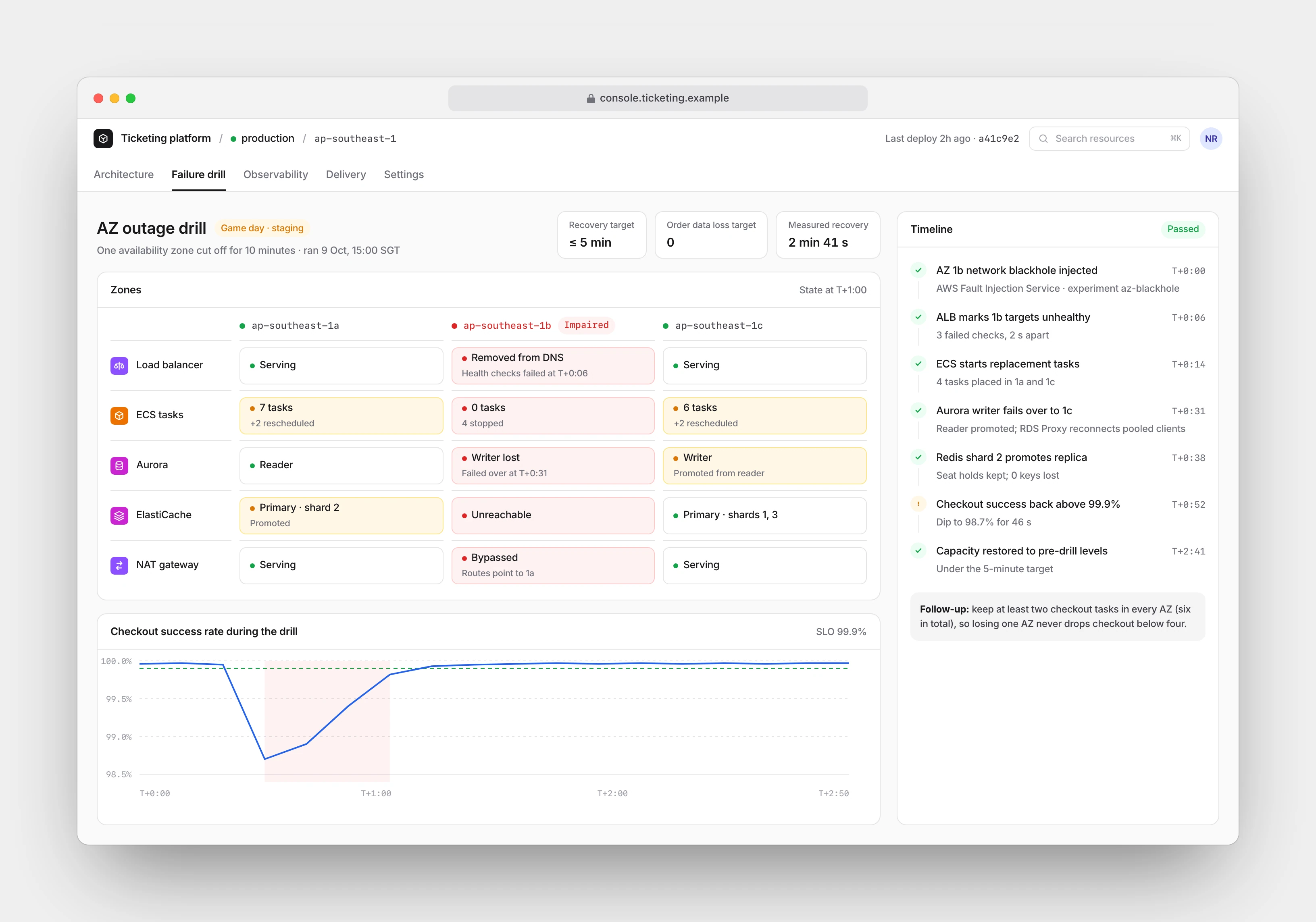
Failure drill: one availability zone cut off, zone by zone, with the recovery timeline. 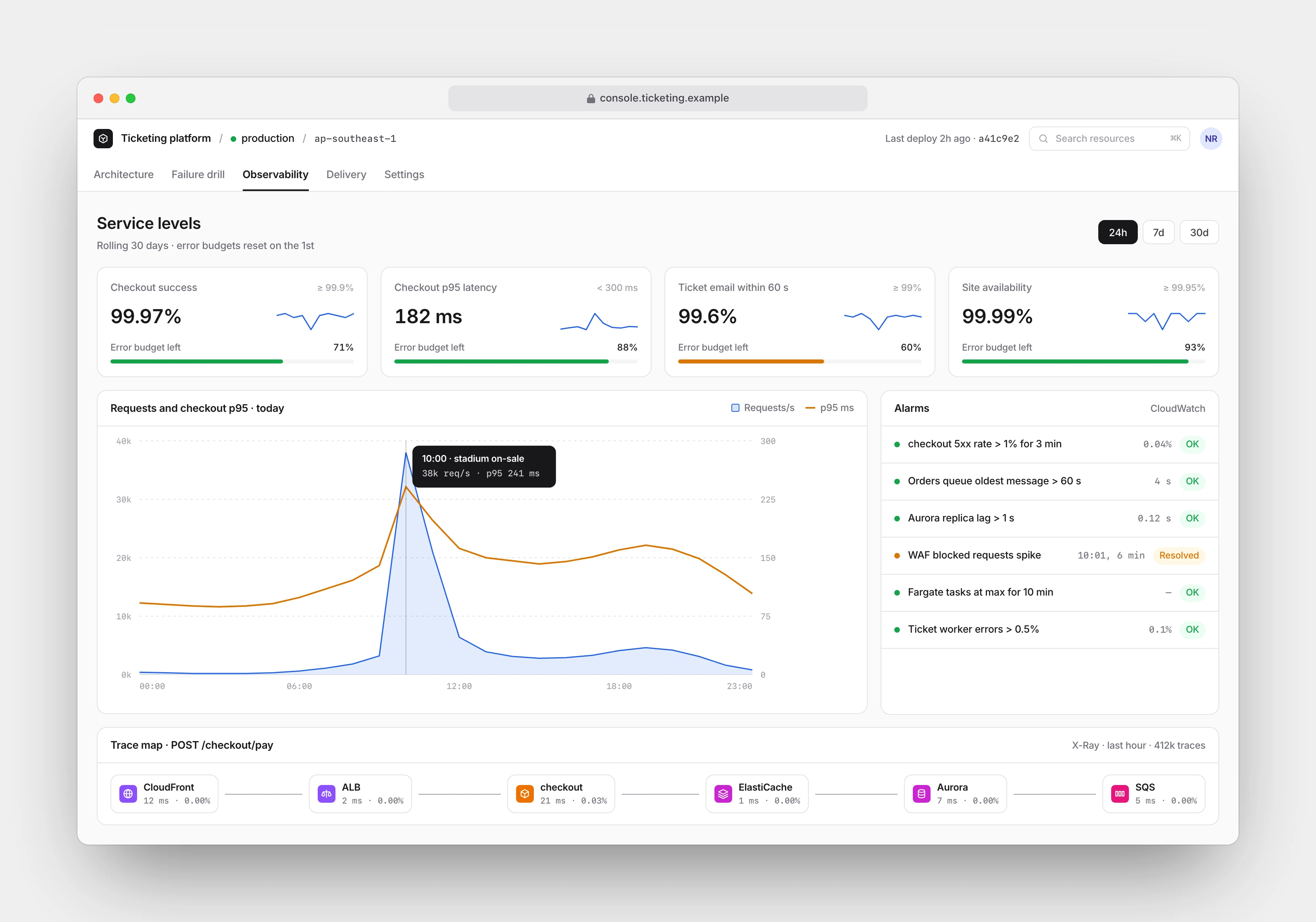
Observability: service levels with error budgets, today's traffic and the on-sale spike, alarms and the trace map. 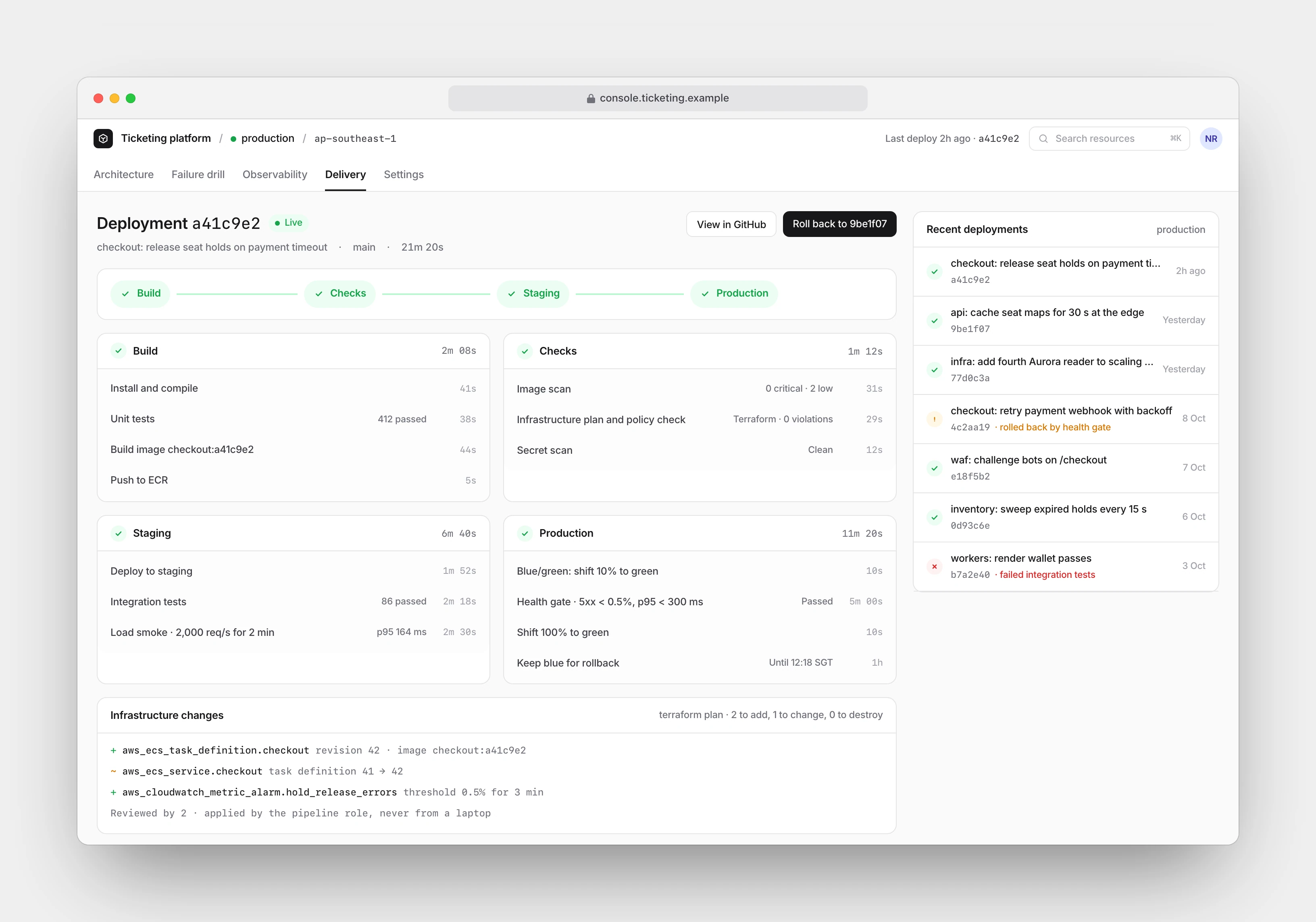
Delivery: one release from commit to blue/green production deploy, with health gates and the infrastructure plan. 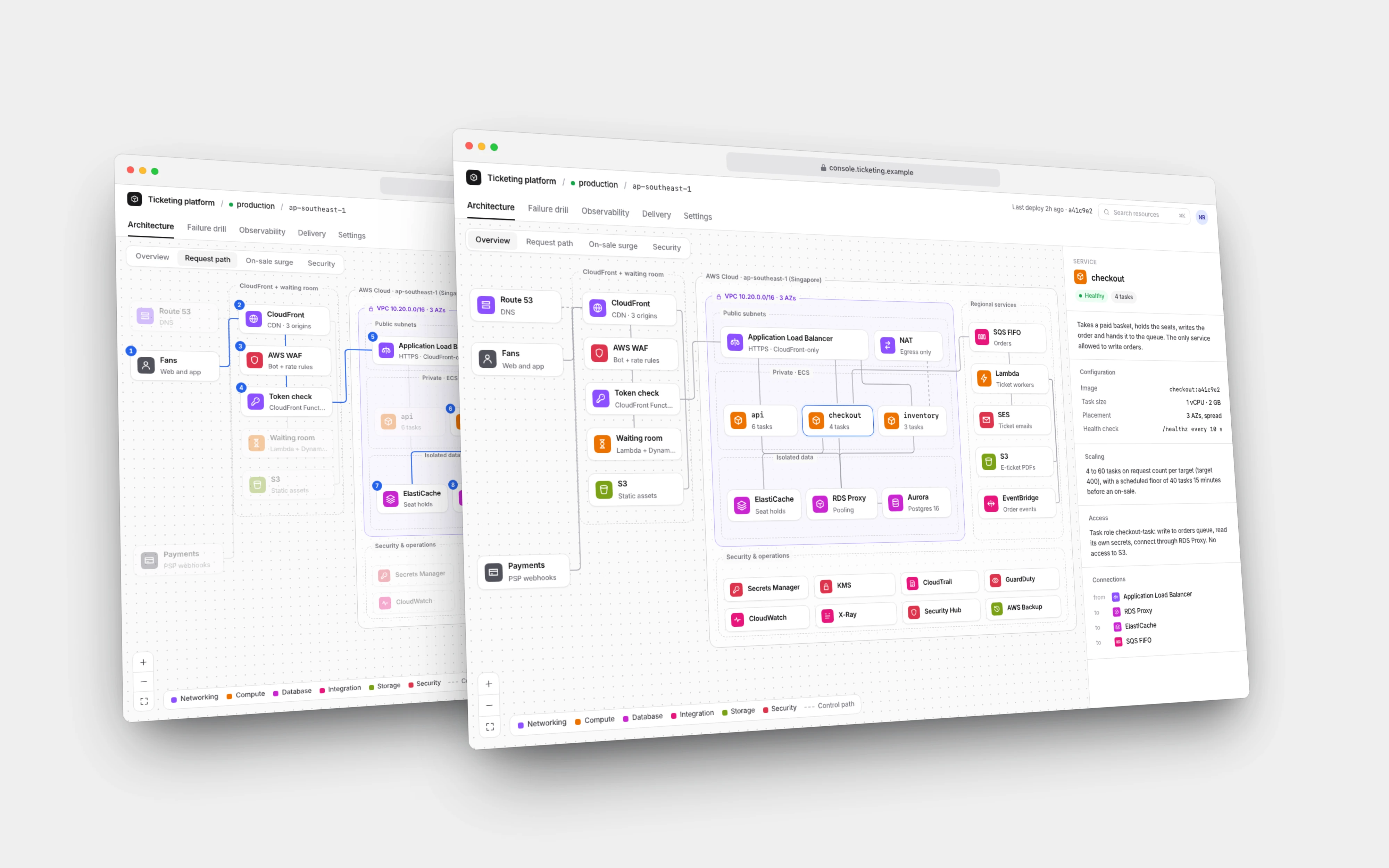
Try it
Architecture: the full platform across edge, VPC and regional services, with the checkout service open in the inspector. Running live: click around. On a phone you get the render instead.
Stack
The stack we would choose to ship Ticketing platform for real, and why.
- Edge
- CloudFront, AWS WAF, CloudFront Functionsthe only public door; token checks cost nothing at peak
- Waiting room
- Lambda, API Gateway, DynamoDBa queue that scales to zero between on-sales
- Services
- TypeScript on ECS Fargate, behind an ALBno servers to patch; tasks pre-scale before a sale
- Data
- Aurora PostgreSQL, RDS Proxy, ElastiCache (Redis)orders in Postgres, seat holds in memory with a TTL
- Async
- SQS FIFO, Lambda, SES, EventBridgetickets and emails never slow checkout
- Infrastructure
- Terraform, GitHub Actions, CodeDeploy blue/greenevery change reviewed and reversible
- Operations
- CloudWatch, X-Ray, GuardDuty, Security Hub, AWS Backup, Fault Injection ServiceSLOs, traces and drills in one account
Want something like this for your business?
We design, build and run cloud & security for growing businesses. Tell us what you need on a discovery call.
Book a discovery callMore studies
- Health & wellness
- iOS app
Nocturne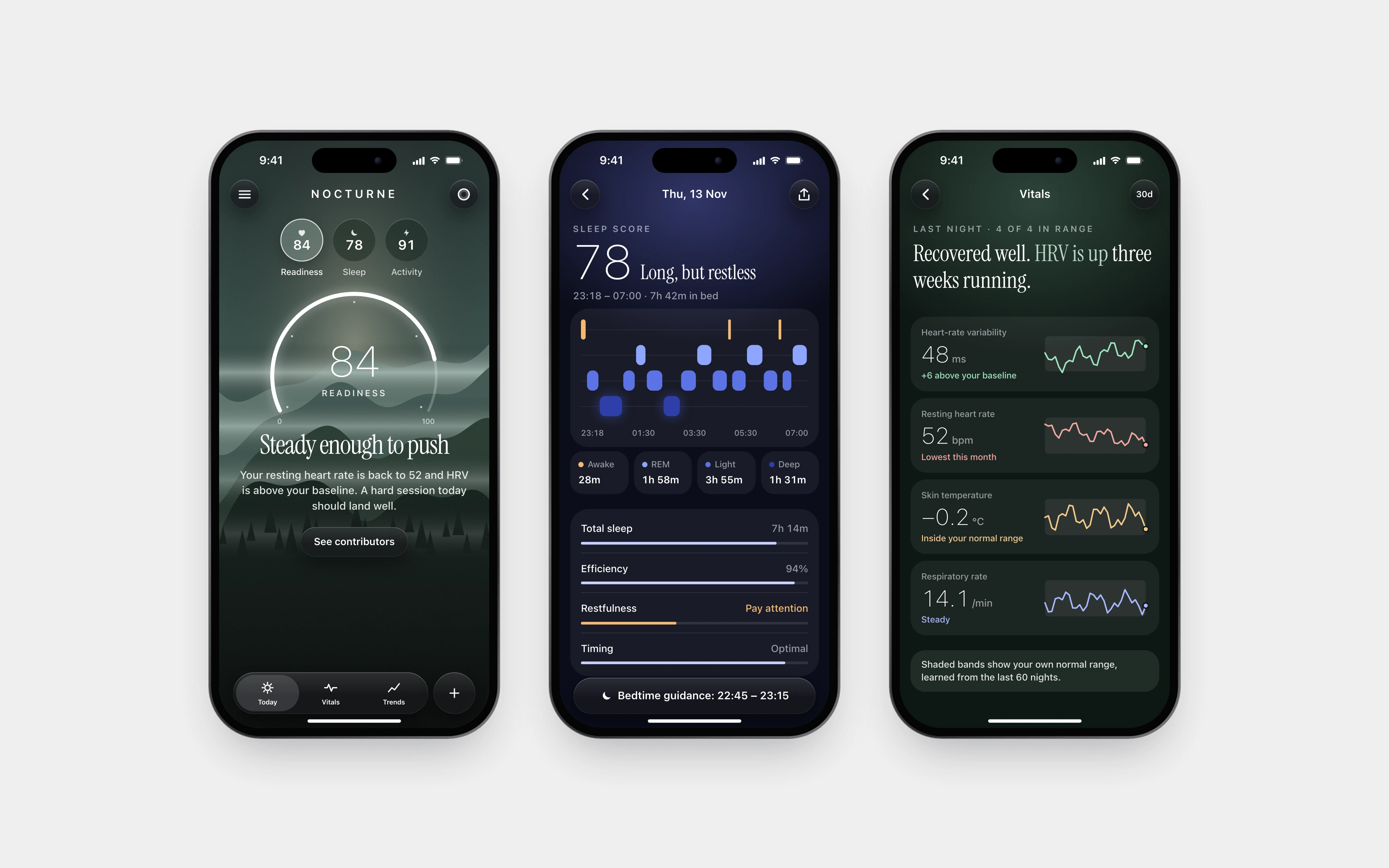
- Fintech
- iOS app
Saltwell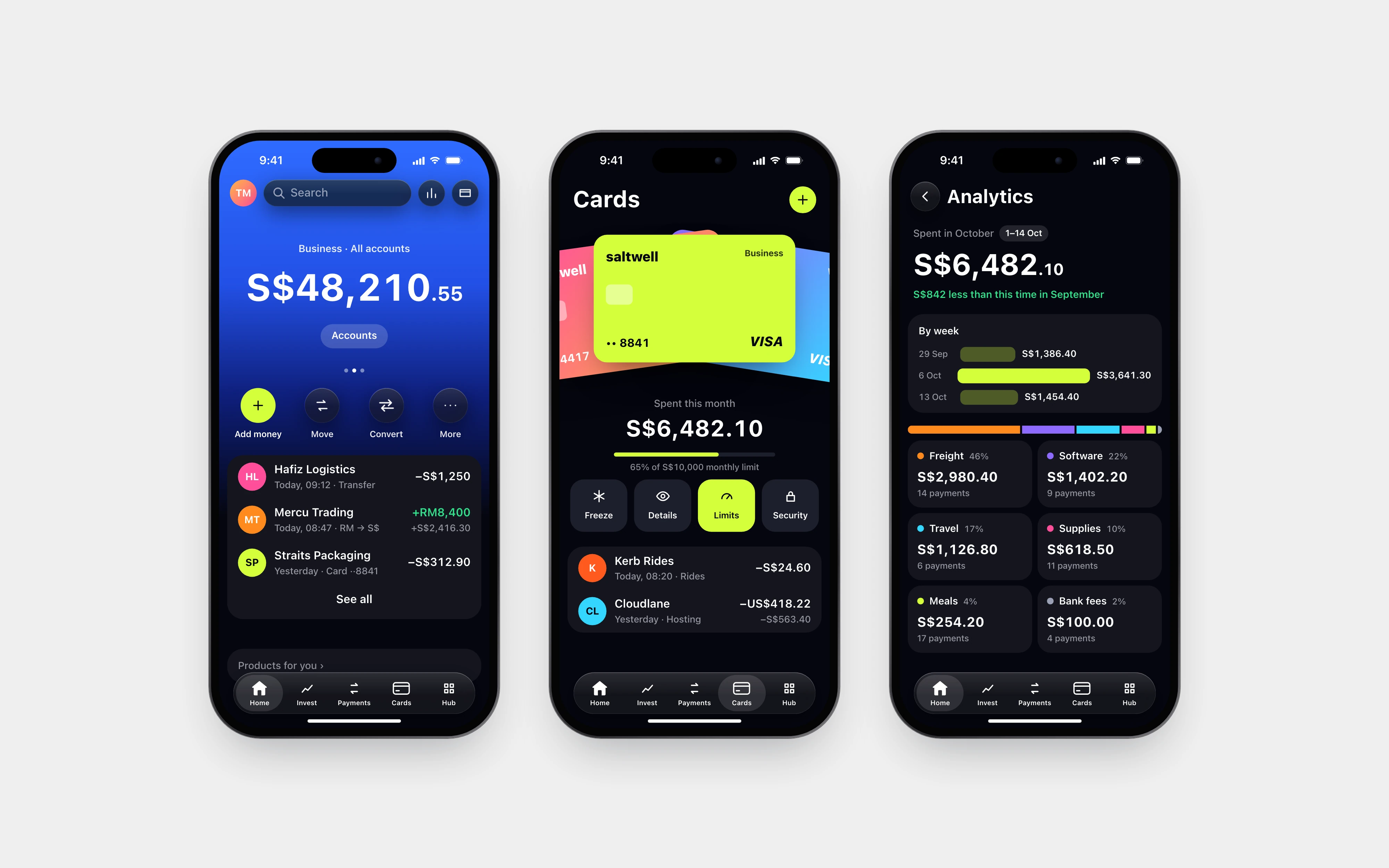
- Construction
- Automation
Fitwell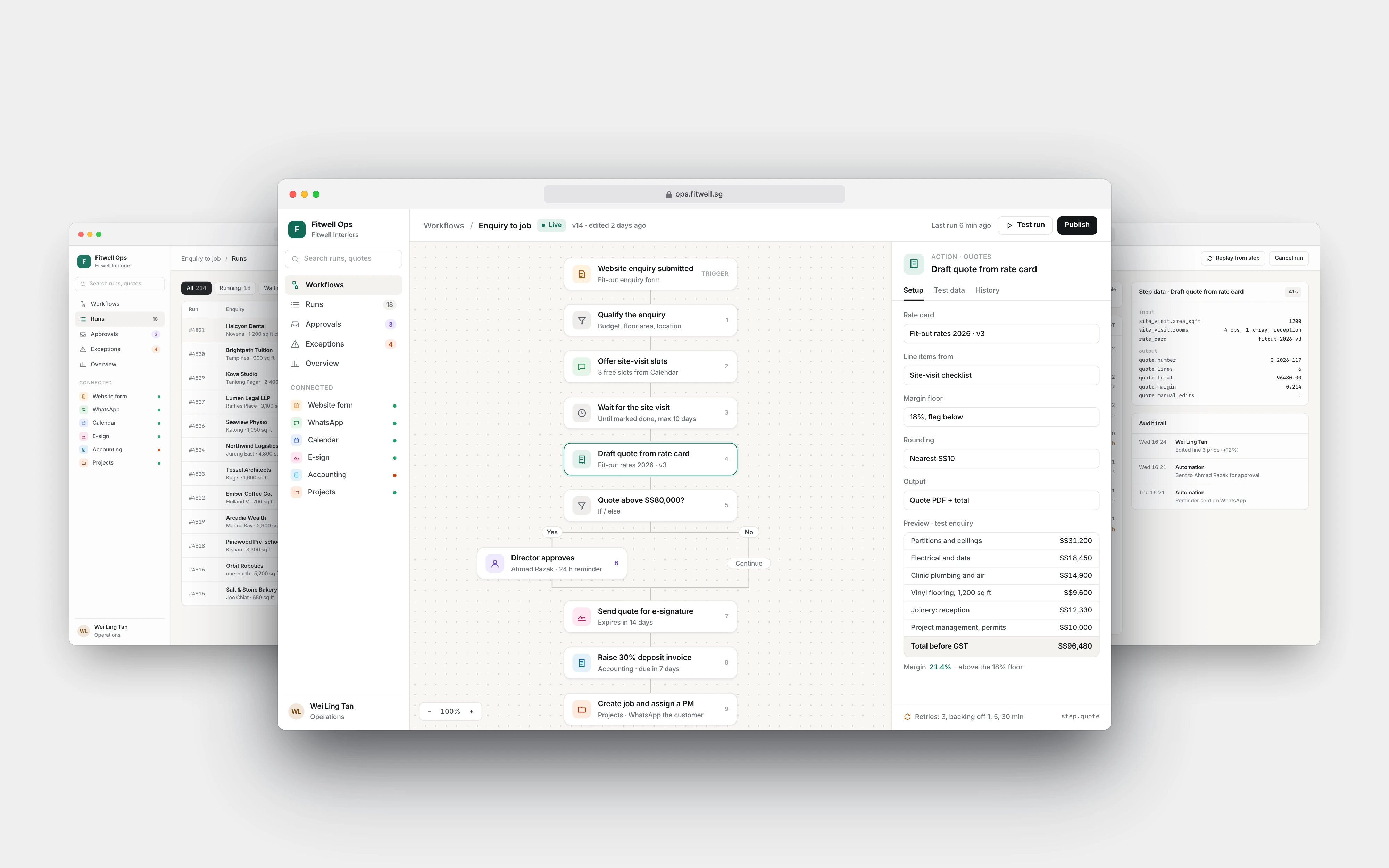
- Digital wellbeing
- Onboarding flow
Hush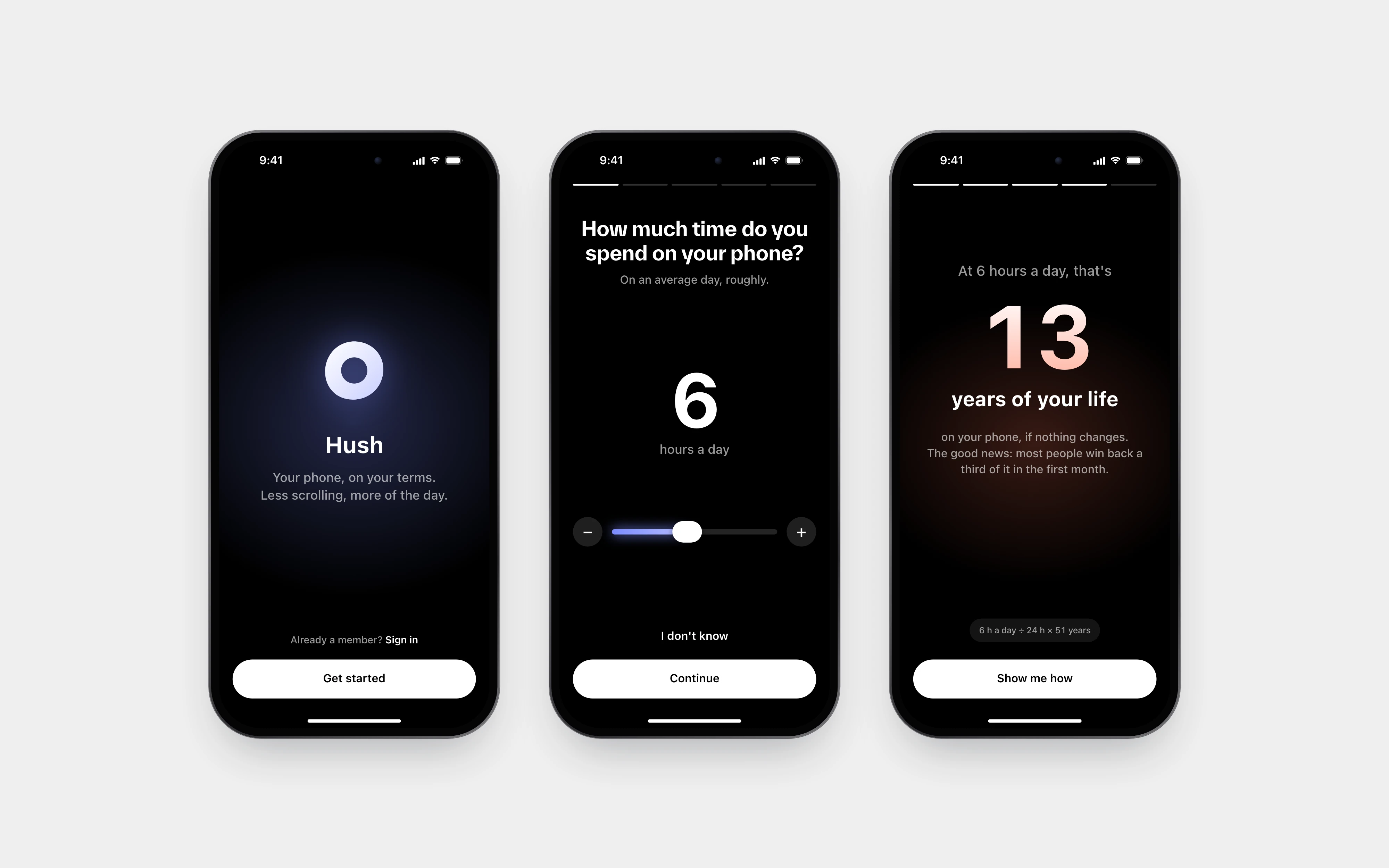
- Retail
- Dashboard
Tillpoint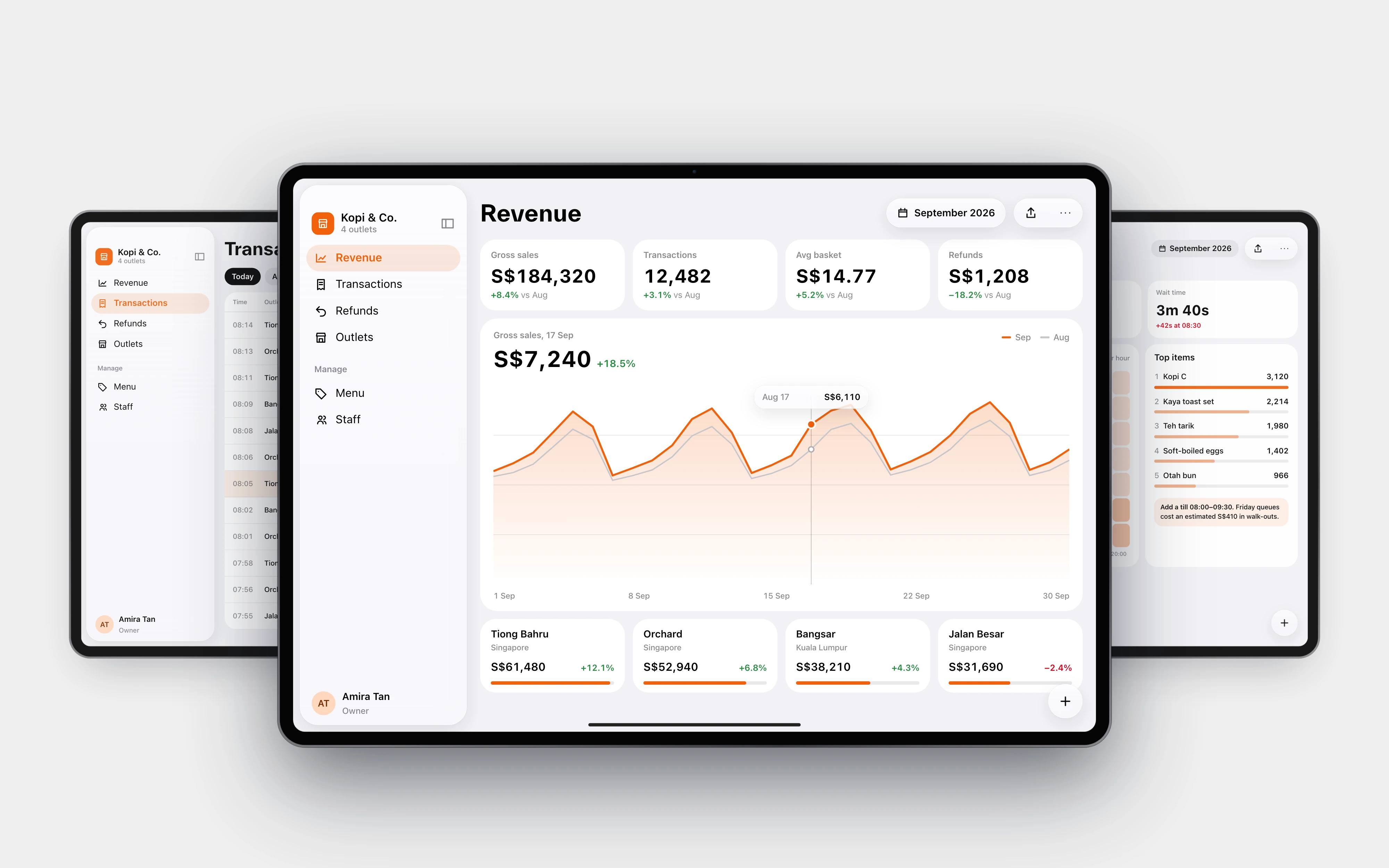
- E-commerce
- Integration
Sundry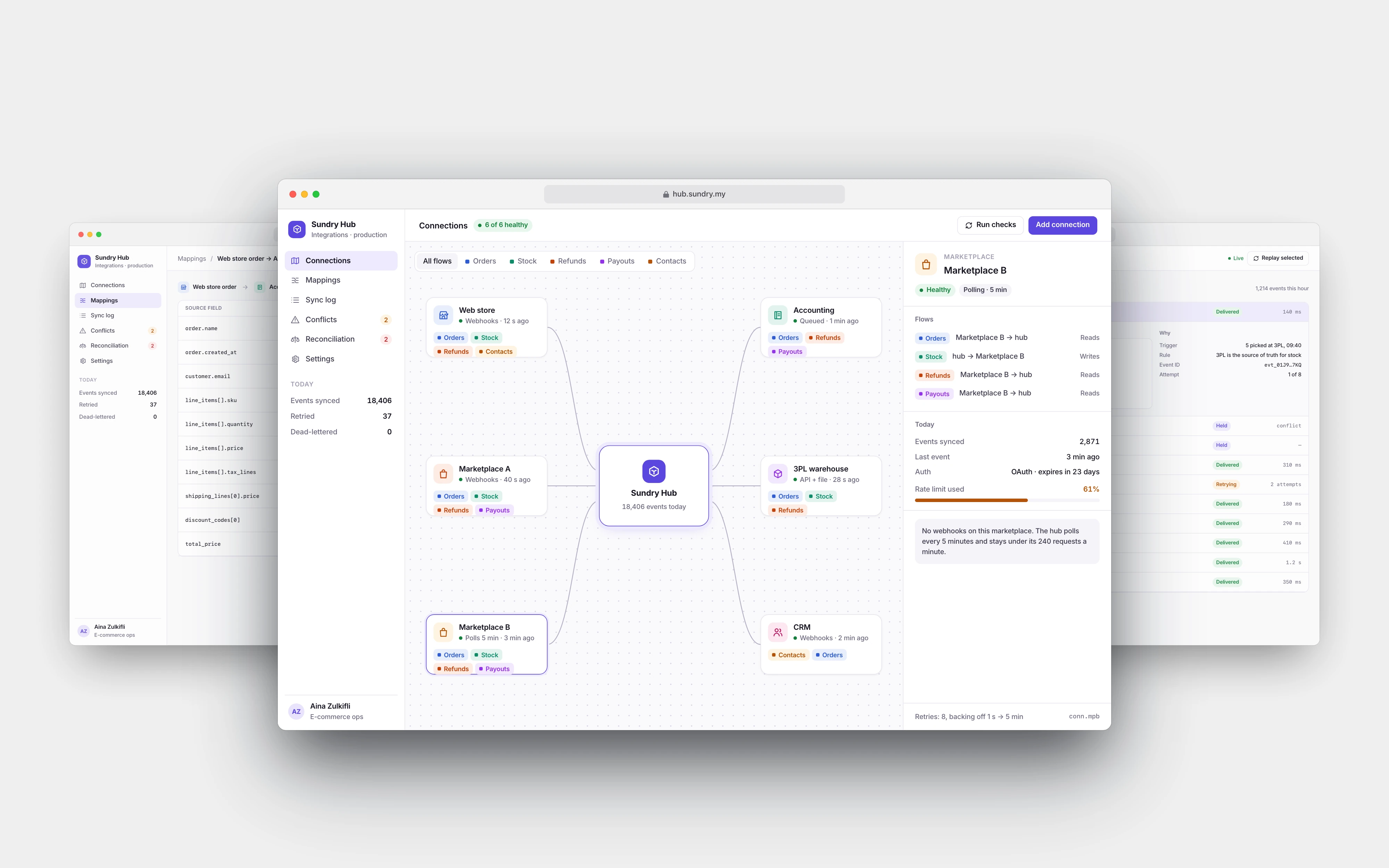
- Travel
- iOS app
Contrail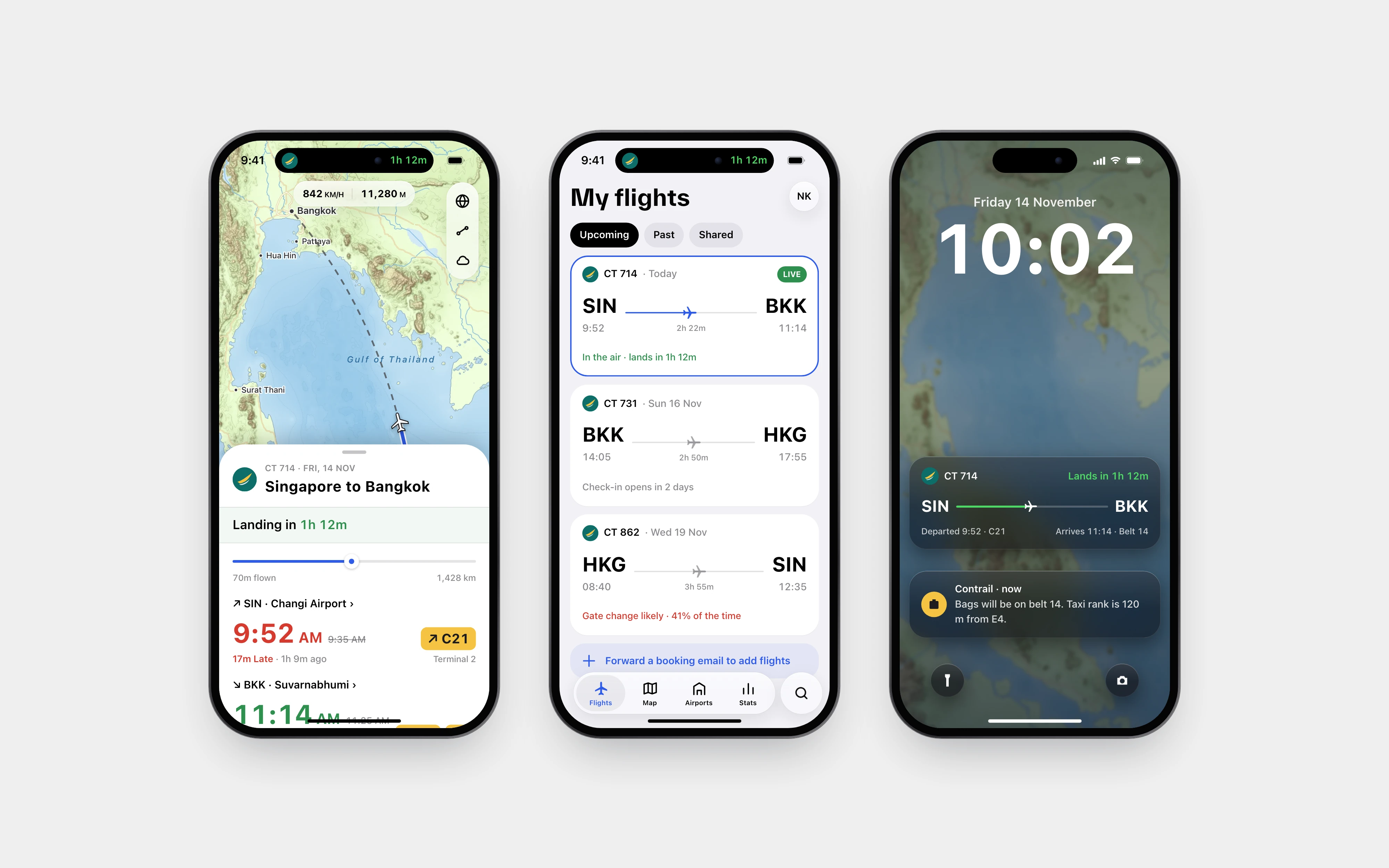
- Education
- Onboarding flow
Parlo
- Fitness
- iOS app
Kestrel
- Logistics
- Dashboard
Dockyard
- Fintech
- iOS app
Tessera
- E-commerce
- iOS app
Pollen
- SaaS
- Dashboard
Plumb
- AI
- iOS app
Wren